


Ankle & Foot Specialist in Singapore for Bone, Joint & Injury Care
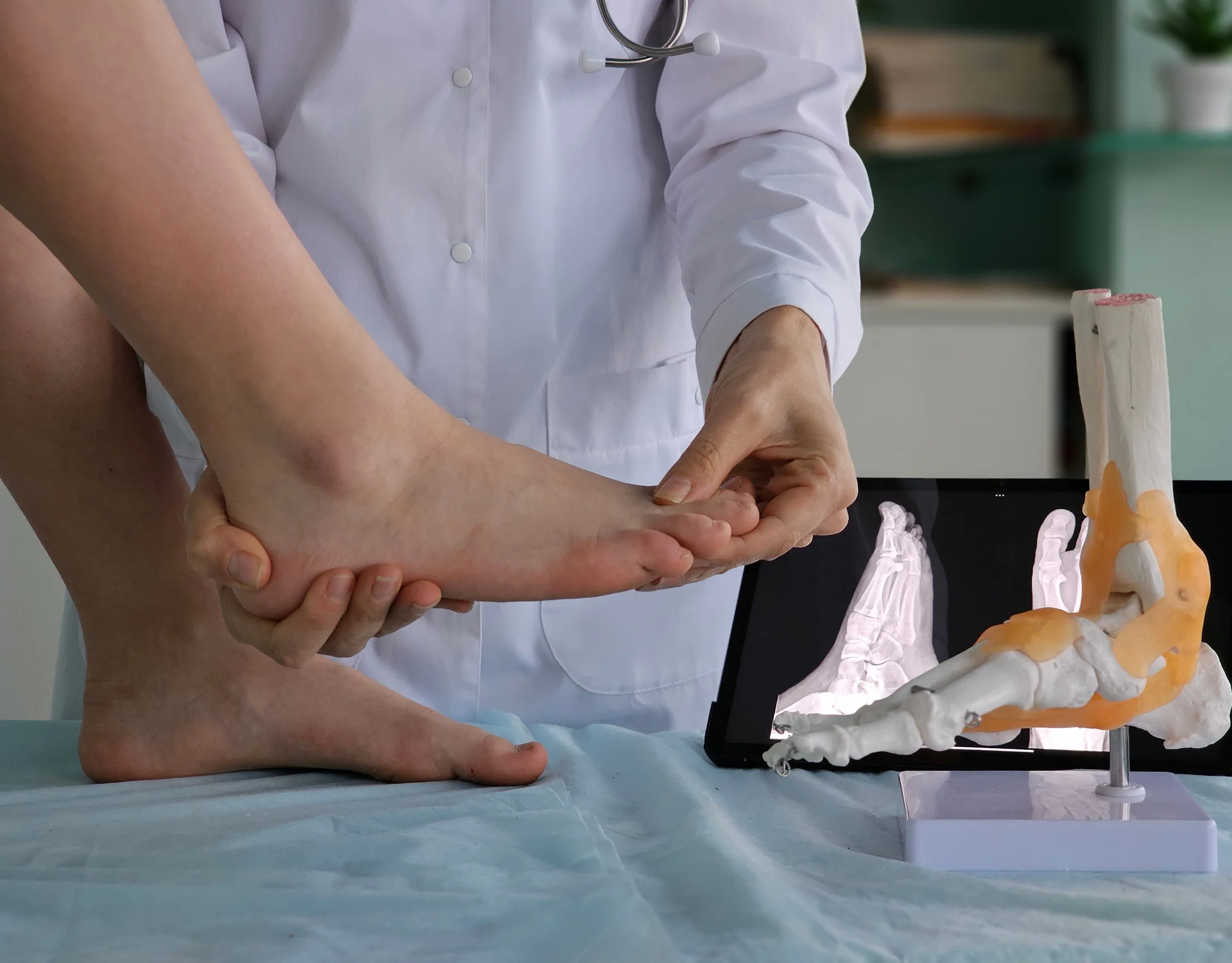

Every step you take depends on the health of your feet and ankles. When pain, discomfort, instability or injury gets in the way, even the simplest tasks — walking to the bus stop, climbing stairs, keeping up with your children — become a challenge.
Whatever you may be dealing with, Centurion Orthopaedic Centre offers specialist care at our two foot and ankle clinics in Singapore: Mount Elizabeth Novena Hospital, and Connexion, Farrer Park.
Our fellowship-trained specialists, Dr Bruce Ang and Dr Tan Shi Ming, bring years of expertise and dedicated practice to the diagnosis and treatment of bone, joint, and soft tissue conditions of the foot and ankle.
When to See a Foot and Ankle Specialist
Occasional aches after a long day on your feet are common. But some symptoms suggest an underlying condition that warrants a proper assessment. As a general rule of thumb, if the symptoms listed below persist beyond two weeks, it is worth seeing a foot or ankle specialist in Singapore as soon as possible.
- Persistent pain or swelling in the foot or ankle
- Difficulty walking or bearing weight
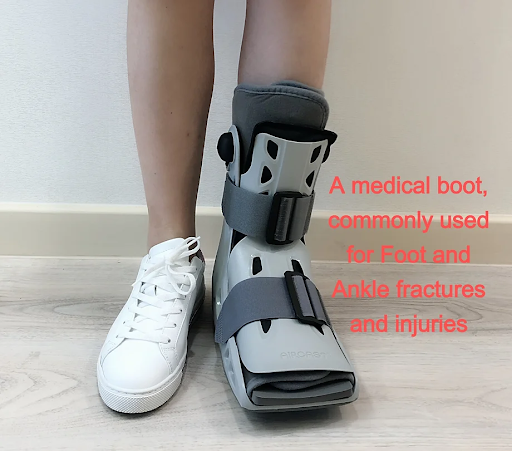
- Pain that followed a recent injury, such as a sprain or fracture
- Numbness, tingling, or burning sensations in the feet
- Visible deformity or misalignment of the foot or ankle
- Chronic conditions such as bunion, hammertoe, flat feet deformities, or ankle and foot arthritis
- Ongoing discomfort following a previous foot or ankle surgery or injury, or a sense that recovery has stalled

Foot & Ankle Conditions We Treat in Singapore
Foot and ankle conditions are often easily overlooked. Many start as minor discomfort and worsen gradually, often because the underlying cause goes unidentified. Below is an overview of the conditions we typically see and treat at Centurion Orthopaedic Centre.
| Condition | Common Causes | Key Symptoms | Treatment Options |
|---|---|---|---|
| Plantar Fasciitis |
|
|
|
| Achilles Tendinitis / Tendinopathy |
|
|
|
| Ankle Sprains and Chronic Ankle Instability (CAI) |
|
|
|
| Bunions and Hammertoes |
|
|
|
| Flat Feet (Fallen Arches) |
|
|
|
| Foot And Ankle Fractures |
|
|
|
| Ankle Arthritis |
|
|
|
| Peroneal Tendon Injuries |
|
|
|
| Diabetic Foot |
|
|
|
| Posterior Tibial Tendon Dysfunction (PTTD) |
|
|
|
| Tarsal Tunnel Syndrome |
|
|
|
| High-Arched Feet (Cavus Foot) |
|
|
|
Sports & Active Lifestyle: Ankle & Foot Injuries
Foot and ankle injuries are among the most common in sport. Whether you run regularly, play football or basketball, practise martial arts, or are returning to training after a period off, the demands placed on your feet and ankles are significant.
Common sport-related presentations include:
- Achilles tendon tears
- Ankle sprains
- Chronic instability
- Stress fractures of the foot
- Plantar fasciitis
- Peroneal tendon injuries
Each of these injuries requires an accurate diagnosis and a comprehensive management plan that helps you achieve your activity goals, not just symptom relief.
Our foot and ankle specialists in Singapore work with patients on return-to-sport protocols tailored to the nature of the injury and the demands of the specific sport.
Typical timelines range from four to six weeks for mild soft tissue injuries to three to six months following surgical reconstruction, though these vary considerably by individual.
Diagnosis of Foot and Ankle Conditions
Some foot and ankle injuries are more difficult to identify in the early stages, especially for clinicians who do not specialise in this area.
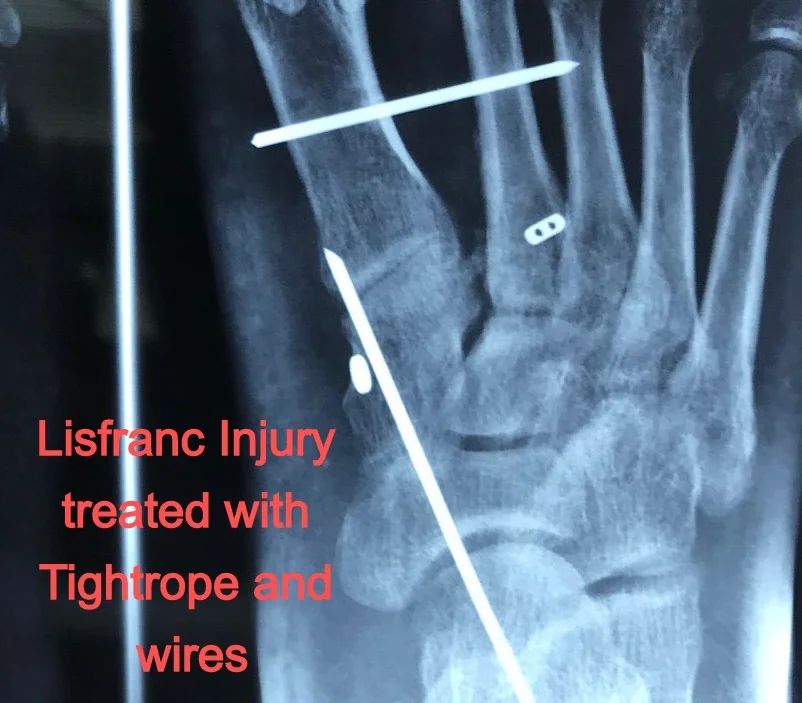
Our specialists have seen the following types of an ankle injury or foot injury initially present with normal X-rays, yet produce persistent pain and functional limitation:
- Lisfranc injuries
- Osteochondral lesions (also known as cartilage damage)
- High ankle sprains (syndesmotic injuries)
- Stress fractures
- Tendon dislocations
Our foot and ankle specialists in Singapore maintain a high index of clinical suspicion for these presentations, drawing on focused training and extensive case experience to reach a diagnosis.
| Diagnostic Tool | Used For |
|---|---|
| X-Ray | Visualising bone structure; identifying fractures; assessing alignment |
| MRI Scan | Evaluating soft tissues: tendons, ligaments, and cartilage |
| CT Scan | Complex fractures and pre-surgical planning |
| Ultrasound | Real-time assessment of tendons and soft tissue structures |
| Clinical Examination | Assessing range of motion, identifying pain triggers, evaluating muscle strength and stability |
Non-Surgical Treatments for Foot and Ankle Pain
Many foot and ankle conditions respond well to non-surgical specialist care. At Centurion Orthopaedic Centre, our team will recommend the most appropriate combination of treatments based on your diagnosis, activity level, and treatment goals.
| Treatment | What It Does | Recommended For | Expected Outcome |
|---|---|---|---|
| Physiotherapy | Addresses underlying mechanics through strength, flexibility, gait, and loading exercises; may include manual therapy and taping |
|
|
| Orthotics and Braces | Corrects alignment; redistributes load across the foot; reduces stress on vulnerable structures |
|
|
| Medications | Pain relievers and anti-inflammatories reduce acute pain and swelling |
|
|
| Corticosteroid Injections | Targeted pain relief and inflammation reduction at the injection site |
|
|
| Viscosupplementation Injections | Gel-like substance injected to improve joint lubrication and reduce pain |
|
|
| PRP Injections | Concentrated platelets from your own blood used to stimulate tissue repair |
|
|
| Shockwave Therapy (ESWT) | Acoustic pulses stimulate healing in chronically injured tendons and soft tissue; non-invasive |
|
|
| Lifestyle Modifications | Weight management; footwear guidance; activity adjustment to reduce mechanical load |
|
|
Surgical Solutions for Foot and Ankle Pain
When conservative treatments have not provided sufficient relief, or where the severity of the condition warrants it, foot and ankle surgery may be the most appropriate path. Our specialists are experienced in a full range of surgical procedures, including minimally invasive techniques where suitable.
| Procedure | What It Involves | Recommended For | Expected Outcome |
|---|---|---|---|
| Ankle Arthroscopy |
Minimally invasive camera-guided treatment of joint problems
|
|
|
| Fracture Fixation | Internal plates and screws realign and stabilise fractured bone while it heals |
|
|
| Achilles Tendon Repair | Surgical reattachment or reconstruction of a ruptured Achilles tendon |
|
|
| Bunion Surgery (including MIS) | Realignment of the big toe joint; includes Scarf osteotomy and minimally invasive bunion surgery (MIS) for reduced recovery time |
|
|
| Hammertoe Correction | Tendon release or repositioning; bone reshaping to straighten the affected toe |
|
|
| Ankle Ligament Reconstruction (Brostrom) | Repair or reconstruction of damaged ligaments to restore lateral ankle stability |
|
|
| Ankle Fusion or Total Ankle Replacement |
|
|
|
Recovery and Rehabilitation
Recovery timelines vary depending on the type and severity of the condition and the treatment received. The following table provides a general guide. Individual recovery will depend on several factors including age, overall health, and adherence to rehabilitation.
| Treatment / Procedure | Typical Recovery Timeline |
|---|---|
| Minor Ankle Sprain | 1–2 weeks |
| Ligament Reconstruction | 3 weeks walking smoothly; 6–8 weeks running; 3–4 months return to sports |
| Minimally Invasive Bunion Surgery | 4–6 weeks; 2–3 months back to sports |
| Standard Bunion Surgery | 6–12 weeks |
| Hammertoe Correction | 2–4 weeks |
| Achilles Tendon Repair | 6–12 weeks |
| Ankle Fracture Fixation | 6–12 weeks (depending on fracture) |
| Ankle Fusion | 1–3 months |
| Total Ankle Replacement | 1–2 months |
During recovery, we will monitor your post-operative progress regularly and guide you on the road to recovery including:
- Managing your wounds
- Working with highly qualified physiotherapist to restore your mobility, flexibility, strength and overall ambulatory function.
- Return you to your pre-injury function through the post-procedure protocol, as directed by your foot or ankle specialist in Singapore.
Upon recovery, provide you appropriate advice to prevent recurrence of conditions.
Follow-up consultations are available to monitor progress and adjust your rehabilitation plan as needed.
Prevention Tips for Foot and Ankle Pain
While not all foot and ankle problems are preventable, the following measures can meaningfully reduce your risk:
- Maintain a healthy weight to reduce mechanical load on your joints.
- Wear supportive footwear suited to your foot type and activity.
- Look for adequate arch support, a stable heel counter, and appropriate cushioning.
- Avoid prolonged use of completely flat or unsupportive shoes.
- Stretch and strengthen your foot and ankle muscles regularly, particularly before and after exercise.
- Avoid sudden increases in exercise intensity or volume. Instead, build up gradually to give tendons and ligaments time to adapt.
- Treat minor injuries promptly rather than pushing through persistent discomfort.
- If you play basketball, run, or practise high-impact sports, consider ankle taping or bracing during training if you have a history of sprains or instability.
If you would like to discuss whether any of the treatments above are right for your situation, our foot and ankle specialists in Singapore are available for a personalised consultation.
Meet Our Foot & Ankle Specialists
Choosing the right foot or ankle specialist in Singapore matters as much as choosing the right treatment. At Centurion Orthopaedic Centre, our team combines dedicated foot and ankle expertise with broad orthopaedic experience.

Dr Tan Shi Ming
Dr Tan Shi Ming is an orthopaedic surgeon who sub-specialises in foot and ankle conditions. He has fellowship training from the UK, Switzerland, and France, and is a Fellow of the Royal College of Surgeons of Edinburgh, FRCSEd(Orth), and a Fellow of the Academy of Medicine, Singapore (FAMS). His clinical focus covers bunions, toe deformities, ankle arthritis, and sports injuries of the foot and ankle.
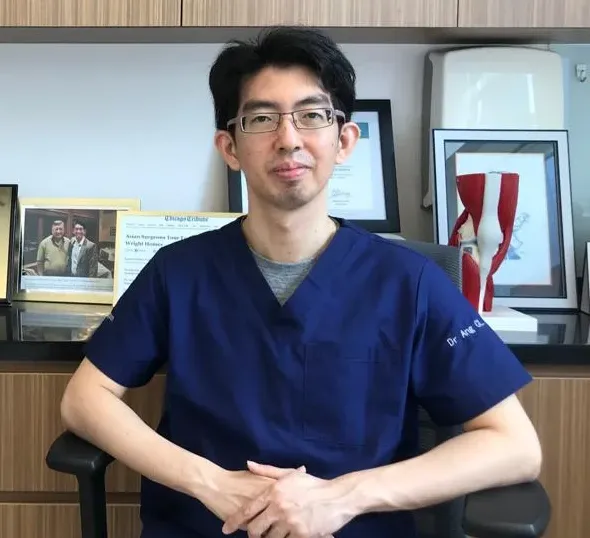
Dr Bruce Ang
Dr Bruce Ang is an orthopaedic surgeon with more than 20 years of experience and over 6,000 orthopaedic surgeries performed. He is a Fellow of the Royal College of Surgeons of Edinburgh, FRCSEd(Orth), and a Fellow of the American College of Surgeons (FACS). He sub-specialises in knee, hip, and shoulder conditions, sports injuries, and joint degeneration, and contributes to the team’s broad surgical expertise across bone and joint conditions.
Why Choose Centurion Orthopaedic Centre?
Choosing a foot or ankle specialist in Singapore is a significant decision. Here is what distinguishes our approach:
Clinical Expertise
- Fellowship-trained surgeons with a combined breadth of expertise across foot, ankle, knee, hip, and shoulder conditions.
- Clinical suspicion for difficult-to-diagnose injuries, including Lisfranc injuries, high ankle sprains, osteochondral lesions, and stress fractures.
- Wide range of care: from conservative, non-surgical management through to complex reconstructive surgery.
Practical Access
- Two convenient foot and ankle clinic locations: Mount Elizabeth Novena Hospital and Connexion, Farrer Park.
- Medisave-claimable procedures and acceptance by major private insurers.
- Bilingual consultations available in English and Mandarin.
- Attentive, patient-centred team focused on clear communication and personalised care plans.
Medisave & Insurance Coverage
These foot and ankle surgical procedures are Medisave-claimable:
- Ankle ligament reconstruction
- Ankle arthroscopy
- Ankle fusion
- Total ankle replacement
- Achilles tendon repair
- Bunion and hammertoe surgery
- Fracture fixation

Our team handles the necessary checks and pre-authorisation requests on your behalf. If you would like to confirm your coverage before booking, please contact us directly and we will assist you.
Frequently Asked Questions About Foot and Ankle Pain Treatment
What are the most common causes of foot and ankle pain?
Foot and ankle pain can arise from a wide range of causes. These include acute injuries such as sprains and fractures, overuse conditions such as plantar fasciitis and Achilles tendinitis, structural issues such as flat feet and bunions, and systemic conditions such as arthritis and diabetes. An assessment by a foot and ankle specialist in Singapore is the most reliable way to identify the cause and appropriate treatment.
What is the difference between a podiatrist and an orthopaedic foot and ankle specialist?
A podiatrist is a specialist in the assessment and management of foot and lower limb conditions, typically focusing on conservative treatments such as orthotics, wound care, and gait analysis. An orthopaedic foot and ankle specialist is a medical doctor with surgical training, qualified to manage a full spectrum of bone, joint, tendon, and ligament conditions, including complex surgery.
How do I know if I need surgery for an ankle sprain?
Most ankle sprains recover well with conservative management including RICE, bracing, and physiotherapy. Surgery may be considered if the sprain involves complete ligament tears, if significant instability persists after an adequate course of rehabilitation, or if there are associated injuries such as osteochondral lesions. Your foot and ankle specialist will assess the severity of your injury and recommend the most appropriate treatment pathway.
How long does ankle ligament reconstruction take, and what is recovery like?
The surgery itself typically takes 45 to 60 minutes, though you can expect to be in the operating theatre for around two to two and a half hours in total. Most patients walk smoothly within six weeks, begin running at two to three months, and return to jumping sports such as basketball or netball at four to five months post-surgery. Recovery varies depending on individual healing and the demands of your activity.
Can flat feet be corrected in adults?
Yes, in many cases. The appropriate treatment depends on the severity of the deformity and any underlying cause. Mild to moderate flat feet are typically managed with orthotics, supportive footwear, and physiotherapy. More significant deformities, particularly those associated with PTTD, may be suitable for reconstructive surgery. Your foot and ankle specialist in Singapore can assess your foot and advise on the most suitable approach.
What causes chronic ankle instability?
Chronic ankle instability most often develops after one or more ankle sprains that did not heal fully, leaving the ligaments stretched and the joint prone to further giving way. It may also be related to muscle weakness, poor proprioception (the body’s sense of joint position), or an underlying generalised ligamentous laxity. Physiotherapy addresses many cases, while persistent instability may benefit from surgical reconstruction.
Is bunion surgery painful?
Most patients experience manageable discomfort in the first week or two following bunion surgery, which is controlled with medication. Minimally invasive approaches tend to be associated with less post-operative pain than traditional open surgery. Your foot and ankle specialist will discuss what to expect and how pain will be managed throughout your recovery.
How long is recovery after foot or ankle surgery?
Recovery time varies significantly depending on the procedure. Ankle ligament reconstruction typically allows return to basic daily activities within six weeks, while more complex procedures such as ankle fusion or replacement may take three to six months. Adhering to your rehabilitation programme and attending follow-up appointments are important factors in achieving a good outcome.
Are foot and ankle treatments covered by insurance or Medisave?
Coverage depends on your insurance plan and the type of treatment. Medisave can be used for a range of surgical procedures, and many major private insurance plans cover orthopaedic consultations and surgery. Our team is experienced in guiding patients through the pre-authorisation process and will help you understand your coverage before any planned procedure.
Can custom orthotics help with flat feet or plantar fasciitis?
Custom orthotics are often an effective part of managing both conditions. For flat feet, they help support the arch and correct alignment. For plantar fasciitis, they redistribute load away from the inflamed tissue and can meaningfully reduce pain over time. Results vary between individuals, and orthotics are generally most effective when combined with appropriate footwear and physiotherapy.
Book a Consultation with Our Foot and Ankle Specialists in Singapore
Foot and ankle problems are rarely resolved by waiting. With the right diagnosis and a plan tailored to your condition and goals, many patients achieve significant and lasting improvement.
Our foot and ankle specialists in Singapore at Centurion Orthopaedic Centre are available at Novena and Farrer Park for new patient consultations. There is no obligation at your first appointment; it is simply an opportunity to understand what is causing your symptoms and what your options are.
Contact Us
For expert guidance and personalized care, reach out to us—your first step towards a pain-free life with Centurion Orthopaedic Centre.
38 Irrawaddy Rd, #07-40 Mount Elizabeth Novena Hospital Specialist Centre, Novena, Singapore 329563
We are a 3-min walk from Novena MRT Station. Take Exit A from the station.
1 Farrer Park Station Road, #14-09/10 Connexion, Singapore 217562
Please submit your inquiry in English or Mandarin using the form below. We will respond to your query as soon as possible.