


Bunion Treatment and Surgery in Singapore
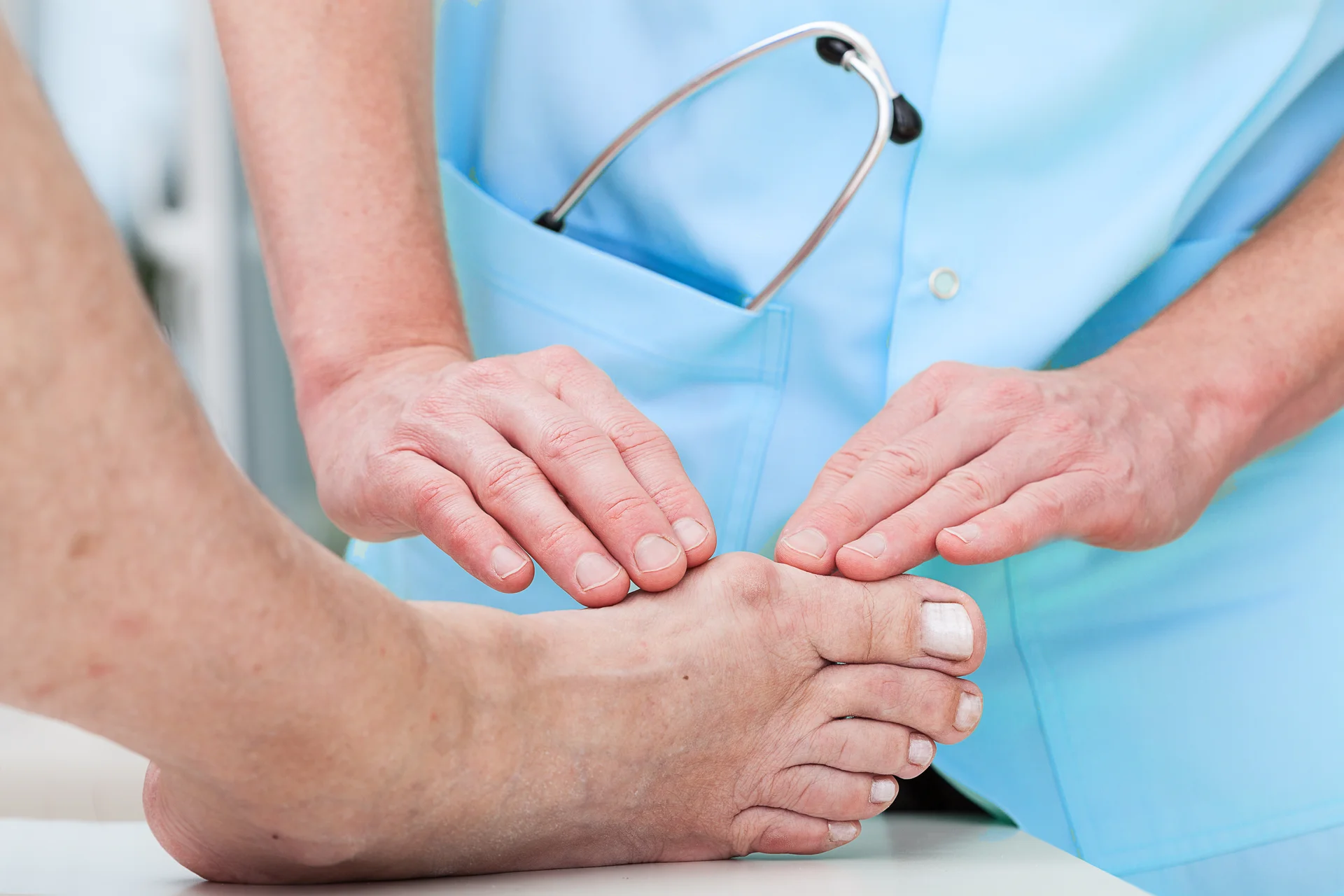

A bunion may start as a small bump you barely notice. But over time, that bump can reshape the joint at the base of your big toe, so that wearing shoes, walking, or doing sports become increasingly uncomfortable.
The good news: bunion deformity is treatable. Whether your symptoms are mild and manageable or severe enough to affect your daily life, there are several bunion treatment options that can relieve your pain and restore normal toe alignment.
At Centurion Orthopaedic Centre, Dr Tan Shi Ming and Dr Bruce Ang CL offer the full spectrum of bunion treatment in Singapore, from conservative management to minimally invasive keyhole surgery for complex deformities.
What Is a Bunion?
A bunion (medically known as hallux valgus) is a bony deformity that develops at the metatarsophalangeal joint. This is the joint at the base of your big toe, where the first metatarsal bone meets the toe. Over time, the big toe drifts towards the smaller toes, and the joint protrudes outward on the inner side of the foot.
It is a progressive deformity. Without intervention, bunions typically worsen gradually, which is why early assessment matters.
Common symptoms include:
- Pain, swelling, or tenderness around the big toe joint
- Redness or inflammation over the bony bump
- Difficulty fitting into normal footwear
- Restricted movement of the big toe
Left untreated, a bunion can place abnormal pressure on the smaller toes and contribute to secondary conditions including hammertoe deformity and metatarsalgia (pain in the ball of the foot).
Causes and Risk Factors
Bunions develop when the forces acting on your foot are consistently uneven, gradually shifting the alignment of the big toe joint. These factors may increase your risk:
- Genetics: A family history of bunions is one of the strongest risk factors. The underlying foot structure is often inherited.
- Foot mechanics: Abnormal foot mechanics, including pronation (inward rolling of the foot) and a condition called metatarsus primus varus (an increased angle between the first and second metatarsal bones), place excess stress on the big toe joint.
- Footwear: Prolonged use of tight, narrow, or high-heeled footwear does not cause bunions in isolation, but may accelerate deformity in those who are predisposed.
- Gender: Women are more commonly affected, likely due to a combination of foot anatomy and footwear habits over time.
- Underlying conditions: Arthritis and flat feet can alter joint mechanics and contribute to bunion development.
- Previous foot injuries: Trauma to the foot or toe joint can disrupt alignment and increase susceptibility.
When to See a Bunion Specialist in Singapore
Some bunions are painful from early on, while others cause no discomfort until the deformity becomes significant. You should consider an assessment if you notice any of the following:
- Persistent or worsening pain around the big toe joint, even at rest
- Visible change in the shape of your foot or toe alignment
- Difficulty finding footwear that fits comfortably
- Redness, swelling, or skin irritation over the bunion
- A change in the way you walk, or pain when bearing weight
- The bunion is beginning to push on your second or smaller toes, which may signal early hammertoe development
As a general guide: if bunion pain persists for more than a few weeks, or begins to affect your daily footwear choices, an early assessment is recommended. Bunions do not resolve on their own, and earlier evaluation gives you more treatment options.
A consultation gives you a diagnosis, a severity assessment, and a clear view of your options, without any obligation to proceed with treatment.
Meet Your Bunion Specialists in Singapore
Bunion patients at Centurion Orthopaedic Centre are assessed and treated by orthopaedic surgeons with subspecialty fellowship training in foot and ankle surgery.
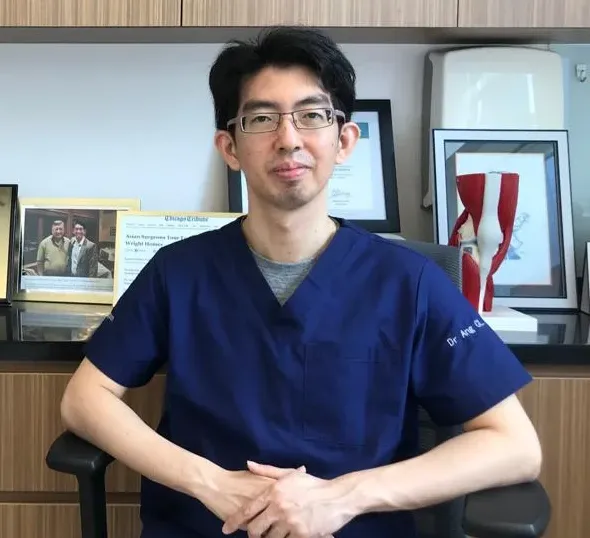
Dr Bruce Ang CL
Senior Consultant
MBBS (NUS), MRCS (Edinburgh), ECFMG (USA), MMed (Orthopaedic Surgery), FRCSEd (Ortho)
Dr Bruce Ang CL has more than 20 years of orthopaedic experience and has performed more than 6,000 orthopaedic surgeries. He sub-specialises in minimally invasive treatment of joint conditions, joint replacements, and fractures.

Dr Tan Shi Ming
Senior Consultant
MBBS (NUS), MRCS (Edinburgh), MMed (Orthopaedic Surgery), FRCSEd (Ortho), FAMS (Ortho, Singapore)
Dr Tan Shi Ming is a fellowship-trained orthopaedic surgeon with a subspecialty focus in foot and ankle conditions, including bunions, toe deformities, ankle arthritis, and sports injuries of the foot and ankle.
Bunion Severity: What Stage Are You At?
Not all bunions are the same. Orthopaedic surgeons assess bunion severity using a weight-bearing X-ray, measuring two key angles:
- Hallux valgus angle (HVA): the angle of deviation of the big toe from the first metatarsal
- Intermetatarsal angle (IMA): the angle between the first and second metatarsal bones
These measurements guide treatment planning. The thresholds below reflect the Coughlin and Mann classification, the most widely referenced system in foot and ankle surgery, though cut-off values vary across different classification systems:
| Severity | HVA | Typical Approach |
|---|---|---|
| Mild | Less than 20° | Conservative management may be adequate to control symptoms |
| Moderate | 20–40° | Surgical evaluation is generally recommended |
| Severe | Greater than 40° | Surgery is typically required to correct the deformity |
Your surgeon will assess your X-rays, your symptom history, and your lifestyle before recommending a treatment pathway.
Non-Surgical Bunion Treatment Options
Conservative bunion treatment does not correct the underlying deformity, and current evidence does not support the view that it halts bony progression. It can, however, meaningfully reduce symptoms, and for milder cases it may be all that is needed for many years.
| Treatment | What it does | Best suited to |
|---|---|---|
| Orthotics and insoles | Redistributes pressure across the foot, reducing load on the big toe joint. | Patients with bunions linked to abnormal foot mechanics or flat feet. |
| Wider footwear | A wide, rounded toe box reduces friction and pressure on the bunion. | Anyone as a first-line measure; one of the simplest ways to manage daily discomfort. |
| Bunion pads and toe spacers | Cushions the joint and reduces skin irritation. Does not slow deformity progression. | Short-term comfort management. |
| Anti-inflammatory medications (NSAIDs) | Reduces pain and swelling during flare-ups, taken orally or applied topically. | Acute episodes of pain or inflammation. |
| Corticosteroid injection | Provides targeted relief from joint pain and inflammation. | When other measures have not provided adequate control. |
| Physiotherapy | Strengthening and mobilisation exercises support surrounding muscles and may ease discomfort. | Adjunct to other measures; does not alter the bony deformity. |
Bunion Surgery: Is It Right for You?
Bunion surgery in Singapore is typically considered when conservative measures are no longer controlling your symptoms, or when the deformity has reached a severity that is affecting your function and quality of life.
You may be a candidate for bunion surgery if:
- Pain persists despite several months of conservative treatment
- The deformity is moderate to severe on imaging
- Chronic inflammation or arthritis has developed in the joint
- The bunion is causing or worsening secondary problems such as hammertoe or metatarsalgia
- You are unable to wear normal footwear or participate in activities
What surgery can achieve:
- Correction of the bony deformity and restoration of normal toe alignment
- Long-term relief from pain and joint irritation
- The ability to return to regular footwear
- Prevention of secondary complications where deformity is addressed before they develop
Surgery is not a decision to take without thorough discussion with your surgeon. A consultation will include a review of your imaging, your symptom history, and your lifestyle, so that the recommended approach is appropriate for you.
Types of Bunion Surgery
The procedure recommended will depend on the severity of your bunion, the degree of joint involvement, and your individual circumstances.
Osteotomy (Bone Realignment)
Osteotomy involves cutting and repositioning the metatarsal bone to correct the angle of the joint. The repositioned bone is held in place with small screws or pins while it heals.
- Scarf osteotomy is the most commonly performed procedure for moderate-to-severe bunions. It involves a Z-shaped cut along the length of the metatarsal, which allows precise correction of both the HVA and IMA. It is well-suited to a broad range of deformity severities.
- Chevron osteotomy is typically used for milder deformities. It involves a V-shaped cut near the head of the metatarsal and is associated with a straightforward recovery.
Bunionectomy (Exostectomy)
This procedure removes the bony prominence on the side of the joint without realigning the bone. It may be appropriate for very mild cases with no significant angular deformity, but is less commonly used as a standalone procedure.
Arthrodesis (Joint Fusion)
For severe deformity or cases where the joint has been significantly damaged by arthritis, the joint may be fused in a corrected position. This eliminates pain but reduces movement at the joint.
Minimally Invasive Bunion Surgery (MIS)
Minimally invasive bunion surgery in Singapore, also called keyhole surgery, uses small incisions (typically less than 5mm) and specialised instruments guided by real-time X-ray imaging (fluoroscopy) to correct the deformity. It can be used to perform osteotomy or other corrections through much smaller access points than traditional open surgery.
Key features of MIS bunion surgery:
- Smaller incisions with reduced soft tissue disruption
- Real-time fluoroscopy guidance for precision correction
- Often performed as a day surgery procedure
- Faster return to walking and daily activities compared with open surgery in many cases
- Reduced scarring
Not every patient is a candidate for the minimally invasive approach. Your surgeon will advise whether MIS is appropriate based on your bunion severity, bone quality, and anatomy.
Recovery After Bunion Surgery
MIS vs Open Surgery: A General Comparison
| Milestone | MIS (Keyhole) | Open Osteotomy |
|---|---|---|
| Return to walking (protected) | Within days, in a surgical shoe | Varies by procedure — typically 2–6 weeks; confirm with your surgeon |
| Stitches removed | Approximately 2 weeks | Approximately 2 weeks |
| First post-op review | 1–2 weeks | 1–2 weeks |
| Return to normal footwear | Approximately 6–8 weeks | 8–12 weeks |
| Physiotherapy begins | As advised by surgeon | As advised by surgeon |
| Return to sport | 3–6 months | 4–6 months |
These are general estimates. Your surgeon will provide a personalised recovery plan based on the procedure performed and your progress at follow-up reviews.
Typical recovery involves:
- Pain management: Prescription analgesia is provided for the early post-operative period. Most patients find pain is well controlled.
- Protective footwear: You will be given a surgical shoe or boot to wear during the early healing phase.
- Gradual weight-bearing: You will be guided on when and how to progress weight-bearing on the operated foot.
- Physiotherapy: Rehabilitation exercises support recovery of strength and movement.

Hammertoe and Associated Conditions
A bunion does not always exist in isolation. As the big toe drifts inward, it places increasing pressure on the second and smaller toes, which can cause them to buckle at the middle joint, a condition known as hammertoe deformity.
Corns, calluses, and metatarsalgia (pain in the ball of the foot) are also common in patients with significant bunion deformity.
At Centurion Orthopaedic Centre, associated conditions such as hammertoe can be assessed and treated alongside your bunion where appropriate, so that the full picture of your foot health is addressed rather than the bunion alone.
If you’re dealing with toe pain, calluses, or discomfort in the ball of your foot alongside your bunion, it’s worth having everything assessed together.
Cost of Bunion Surgery in Singapore
The cost of bunion surgery in Singapore varies depending on several factors:
- Type of procedure
- Clinic or facility used
- Complexity of the bunion deformity
- Whether one or both feet are treated
As a guide, bunion surgery is typically claimable under MediSave and MediShield Life, subject to prevailing withdrawal limits and individual eligibility criteria. You should check with your insurer for the specific coverage applicable to your plan.
A definitive cost estimate can only be provided following a consultation, once your surgeon has assessed your imaging and recommended a specific procedure. This ensures the figure you receive reflects your actual treatment plan rather than a generic range.
Why Choose Centurion Orthopaedic Centre?
Most people come to us having already tried wider shoes, orthotics, and anti-inflammatories. They want to know whether surgery is genuinely the right step. And if it is, they want it done well.
At our clinics in Mount Elizabeth Novena and Farrer Park, you will be seen by an orthopaedic surgeon with dedicated foot and ankle subspecialty training, not a generalist. Here is what that means in practice:
- Minimally invasive keyhole surgery available as a day procedure for appropriate candidates
- Associated conditions treated together, such as hammertoe, metatarsalgia, and flat feet are assessed as part of the same care plan, not referred elsewhere
- MediSave and integrated shield plans accepted for eligible procedures
- Consultations in English and Mandarin
Frequently Asked Questions
Which type of bunion surgery is right for me?
That depends on the severity of your bunion and your bone anatomy. For moderate-to-severe deformities, a scarf osteotomy is commonly recommended. When appropriate, minimally invasive keyhole surgery is an option. Your surgeon will review your weight-bearing X-rays at consultation and advise which bunion treatment is right for you.
Is minimally invasive bunion surgery available at Centurion Orthopaedic Centre?
Yes, and it’s performed by a fellowship-trained surgeon. Dr Tan Shi Ming completed subspecialty training in minimally invasive and percutaneous foot and ankle surgical techniques across three centres in the United Kingdom, Switzerland, and France. Not all bunions are suited to this approach; candidacy depends on the degree of deformity and your bone structure. One of our bunion specialists will advise you at your consultation.
Can I use MediSave for bunion surgery in Singapore?
Yes, bunion surgery is generally claimable under MediSave and MediShield Life in Singapore, subject to prevailing withdrawal limits and eligibility criteria. We recommend confirming the specific amount with your insurer ahead of your consultation. See our Medisave and Insurances page for further detail.
How much does bunion surgery cost in Singapore?
The cost varies depending on the procedure, the facility, and the complexity of your case. Because bunion surgery is typically MediSave-claimable, your out-of-pocket costs will depend on your plan and coverage. A personalised estimate is provided following your consultation, once your surgeon has confirmed a treatment plan.
How long does recovery from bunion surgery take?
Timelines vary depending on the procedure. As a guide, MIS patients typically return to normal footwear within six to eight weeks; open osteotomy patients within eight to 12 weeks. See the full recovery comparison above. Your surgeon will give you a personalised timeline at your post-operative reviews.
Will my bunion come back after surgery?
Recurrence is possible. Published data suggest recurrence rates vary depending on the procedure, the severity of the original deformity, and the length of follow-up, with higher rates seen in more severe cases and over longer timeframes. Our bunion specialist will advise you on footwear and activity guidance to support the durability of the correction.
Should I see a podiatrist or an orthopaedic surgeon for my bunion?
For mild symptoms, a podiatrist is a reasonable first step as they can assist with orthotics, padding, and footwear advice. If your bunion is moderate to severe, if surgery may be required, or if you have associated conditions such as arthritis or hammertoe, an orthopaedic surgeon with subspecialty training in foot and ankle conditions is the appropriate specialist.
Is bunion surgery painful?
The procedure is performed under anaesthesia, so you will not feel pain during surgery. Post-operative discomfort is expected and managed with prescribed analgesia. Many patients find pain is well controlled within the first week and reduces steadily after that.
Book a Consultation
If you’re living with bunion pain or have noticed a change in the shape of your foot that is concerning, you should consult a doctor.
At Centurion Orthopaedic Centre, we will assess your foot with weight-bearing X-rays, explain your diagnosis in plain terms, and walk you through the treatment options that are appropriate for your specific situation.
Book a consultation at our Mount Elizabeth Novena or Farrer Park clinic.
Contact Us
For expert guidance and personalized care, reach out to us—your first step towards a pain-free life with Centurion Orthopaedic Centre.
38 Irrawaddy Rd, #07-40 Mount Elizabeth Novena Hospital Specialist Centre, Novena, Singapore 329563
We are a 3-min walk from Novena MRT Station. Take Exit A from the station.
1 Farrer Park Station Road, #14-09/10 Connexion, Singapore 217562
Please submit your inquiry in English or Mandarin using the form below. We will respond to your query as soon as possible.