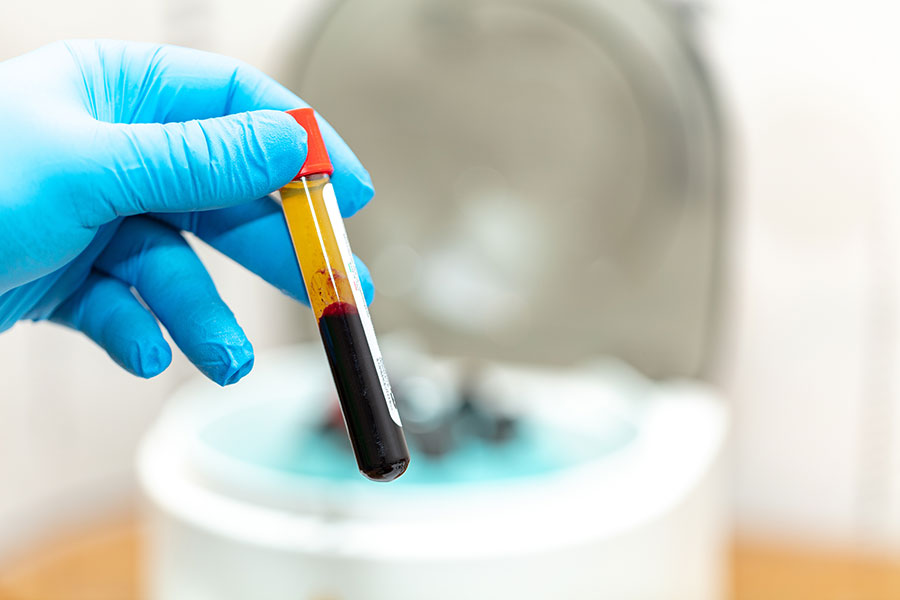
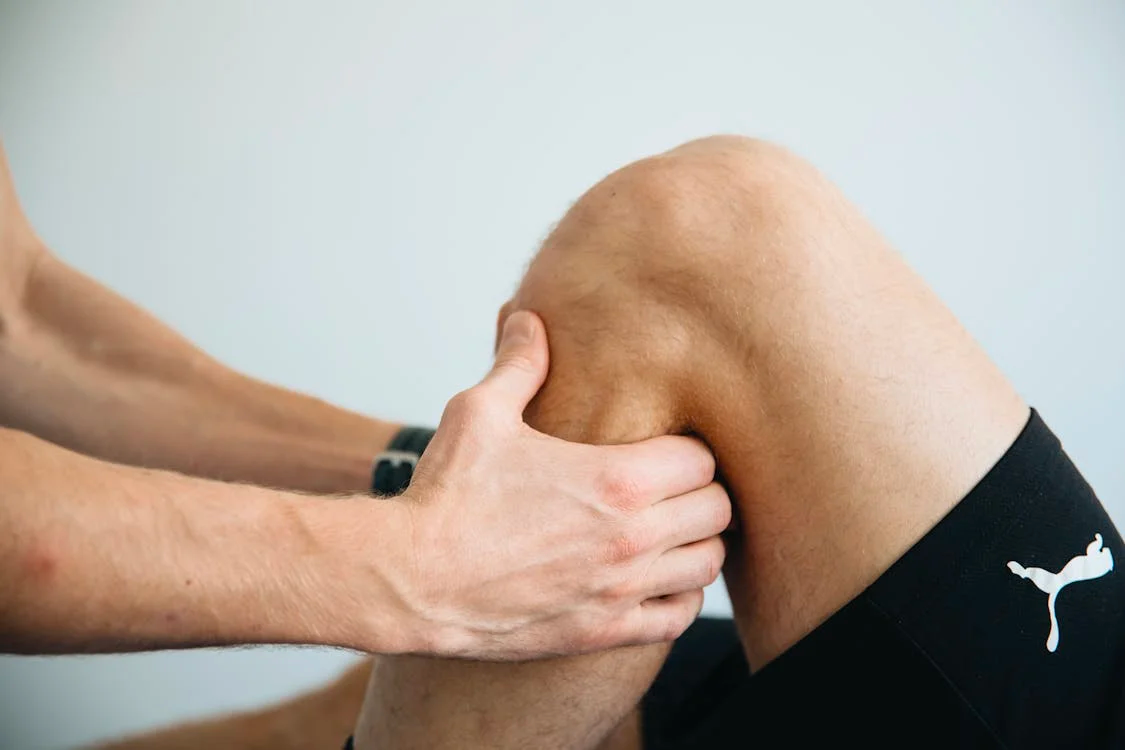
A gloved hand holds a centrifuged blood sample with the platelet-rich plasma layer visible to prepare a PRP injection for the knee.
PRP (platelet-rich plasma) treatmentis a non-surgical treatment option for certain knee conditions and injuries. It is prepared from a small sample of your own blood and injected into the affected area of your knee.
At Centurion Orthopaedic Centre in Singapore, our orthopaedic specialists assess the cause and severity of your knee condition before recommending whether a PRP injection may be suitable for you.
What Is a PRP Injection for the Knee?
A PRP injection for the knee utilises the platelet-rich plasma component of your blood to aid healing of your injured tissues. Platelets are blood components involved in clotting and healing. They also contain growth factors that play a role in the body’s repair processes.
The process is straightforward. Your blood sample is obtained and then processed in a centrifuge to separate and concentrate the platelets. The resulting platelet-rich plasma is then injected into the affected area of the knee.
BecausePRP is prepared from your own blood, the treatment uses your body’s own biological components rather than an externally produced medication.
When May PRP Treatment Be Considered for Knee Conditions?
A PRP injection may be considered for treating selected knee conditions and injuries. The suitability will depend on the underlying problem, its severity and your individual needs.
Knee Osteoarthritis
For mild to moderate knee osteoarthritis, platelet-rich plasma treatment in Singapore may be considered to help manage knee pain and improve function.
Certain meniscus injuries, including selected tears or injuries involving the menisco-capsular ligaments, may be suitable for a PRP injection. Your specialist will assess the type, location and extent of your injury to determine whether PRP is appropriate for you.
Muscle and Ligament Injuries
PRP may be recommended to treat injuries to the muscles or ligaments around your knee in selected cases. The treatment aims to support your body’s natural healing processes alongside rehabilitation and a gradual return to activity.
ACL-Related Injuries
Not every ACL injury requiresACL reconstruction surgery. Depending on the extent of your injury, PRP may be considered as part of a non-surgical treatment and rehabilitation plan.
Patellar Tendon Injuries
For selected patellar tendon injuries, PRP may be an option depending on the nature and severity of the damage. Your specialist will consider your symptoms, activity level and treatment needs when advising whether PRP is suitable for you.
Potential Benefits of PRP Treatment for the Knee
The potential benefits of PRP treatment can vary depending on your condition, its severity and how your body responds to treatment.
Possible benefits may include:
Pain relief: PRP may help reduce pain associated with certain knee conditions and soft-tissue injuries.
Support for the healing response: The concentrated platelets contain growth factors involved in the body’s natural repair processes.
Improved knee function: Some patients may experience gradual improvements in movement and function as symptoms improve.
A non-surgical treatment option: PRP may be considered for suitable patients seeking a non-surgical approach or where surgery is not currently required.
PRP Knee Injection Procedure
A PRP injection procedure typically takes around 20 to 30 minutes and involves several steps.
1. Blood collection
A small sample of blood is drawn from your arm.
2. PRP preparation
The blood is placed into a centrifuge, which separates its different components. The platelet-rich portion is collected and concentrated for the injection.
3. Preparing the Knee
The skin around the treatment area is cleaned and sterilised. The doctor identifies the appropriate injection site based on the area being treated.
4. Local Anaesthetic
A local anaesthetic may be administered to numb the area and minimise discomfort during the procedure.
5. PRP Injection
The prepared platelet-rich plasma is injected into the targeted area of the knee. You will then receive instructions on activity and aftercare following the procedure.
PRP Knee Injection Recovery and Aftercare
Recovery following a plasma injection knee treatment varies depending on the condition being treated, its severity and your individual response.
First 3 to 7 Days
Mild swelling, soreness or minimal discomfort may be experienced during the initial few days after a PRP injection. The existing COC treatment protocol notes that this discomfort following injections may last between two to seven days.
You should follow your specialist’s advice about activity during this initial period.
Over the Next Few Weeks
Improvement is generally gradual rather than immediate. Depending on the condition, changes in knee pain and mobility may continue over approximately one to two months.
The more significant the original knee injury or condition, the longer recovery may take.
Your specialist may also recommend physiotherapy or rehabilitation exercises as part of your recovery. Follow-up allows your progress to be reviewed and your rehabilitation plan adjusted where necessary.
What Should You Avoid After a PRP Knee Injection?
It is important to give your treated knee time to recover after PRP treatment.
You may be advised to:
Avoid strenuous exercise or activities during the initial recovery period
Follow your doctor’s instructions regarding walking, exercise and daily activities
Complete physiotherapy or prescribed rehabilitation exercises where recommended
Return to exercise and usual activities gradually rather than immediately resuming your previous activity level
When Should You Consult an Orthopaedic Specialist About PRP?
PRP is not necessarily suitable for every type of knee pain or injury. Before deciding on treatment, it is important to identify what is causing your symptoms.
Anorthopaedic knee specialist can assess your knee, establish a diagnosis and discuss available treatment options. Depending on your condition, PRP may be considered alongside rehabilitation and other non-surgical treatments, or another treatment approach may be more appropriate. Considering PRP for knee pain? Centurion Orthopaedic Centre can assess your condition and discuss whether PRP is suitable for you.
Meet Our Orthopaedic Specialists for PRP Knee Treatment in Singapore
Centurion Orthopaedic Centre’s orthopaedic surgeons assess knee conditions and provide both non-surgical and surgical treatment options based on each patient’s diagnosis and needs.
Dr Bruce Ang Chia Liang
Dr Bruce Ang Chia Liang is a Senior Consultant Orthopaedic Surgeon with more than 20 years of orthopaedic experience. He has particular expertise in knee, hip and shoulder conditions and has performed more than 1,500 knee surgeries.
His qualifications include MBBS (NUS), MRCS (Ed), MMed (Orthopaedic Surgery) and FRCSEd (Orthopaedics and Traumatology). His approach focuses on individualising treatment for each patient, including the use of non-surgical options where appropriate.
Dr Tan Shi Ming is an MOH-accredited, fellowship-trained orthopaedic surgeon with more than 20 years of experience practising medicine. He completed his medical and orthopaedic training in Singapore before undertaking further fellowship training overseas.
With a personal background in competitive sports and an ongoing interest in running and football, Dr Tan has experience managing orthopaedic injuries affecting both recreational and competitive athletes. His approach is tailored to the patient’s condition and desired level of activity, with surgery not necessarily required for every patient.
Frequently Asked Questions About PRP Knee Injections
How much does a PRP knee injection cost in Singapore?
The price of PRP treatment in Singapore varies depending on the condition being treated, the number of injections required and the individual treatment plan. A consultation is needed to assess your knee and provide an appropriate cost estimate.
How many PRP injections might I need?
Some patients may require one PRP injection, while others may be advised to have more than one treatment. The number of injections depends on the condition, its severity and how you respond to treatment. Your orthopaedic specialist will recommend an appropriate treatment plan after assessment.
Are PRP knee injections painful?
Some discomfort may occur during or after a PRP injection. A local anaesthetic may be used to minimise discomfort during the procedure. Mild soreness or swelling can occur afterwards and may last for several days.
How long does it take to recover after a PRP knee injection?
Initial soreness or swelling may last around three to seven days. Improvement in knee symptoms may then occur gradually over the following weeks, with the existing COC treatment protocol noting a general period of around one to two months for improvement.
Recovery varies according to the knee condition, its severity and the individual’s response to treatment.
Can I walk after a PRP knee injection?
Your doctor will advise you on how much activity is appropriate immediately after the injection. The level of activity recommended can vary depending on the area treated and your underlying knee condition, so follow the specific instructions given after your procedure.
When can I exercise after a PRP knee injection?
Strenuous activity should initially be avoided. Your doctor will advise when you can gradually resume exercise based on your recovery. Physiotherapy or rehabilitation exercises may also be recommended before returning to your usual activities.
What are the possible side effects of a PRP injection?
Temporary soreness, discomfort and swelling around the treated area may occur after a PRP injection. Your specialist will explain what to expect after treatment and when you should seek medical advice if symptoms are unusual or persistent.
Is PRP covered by insurance or MediSave in Singapore?
Coverage for a PRP injection treatment in Singapore depends on your insurer, policy and the treatment involved. MediSave eligibility may also depend on the circumstances and applicable withdrawal rules. Check with your insurer and the clinic before treatment to confirm whether any part of your treatment is claimable.